


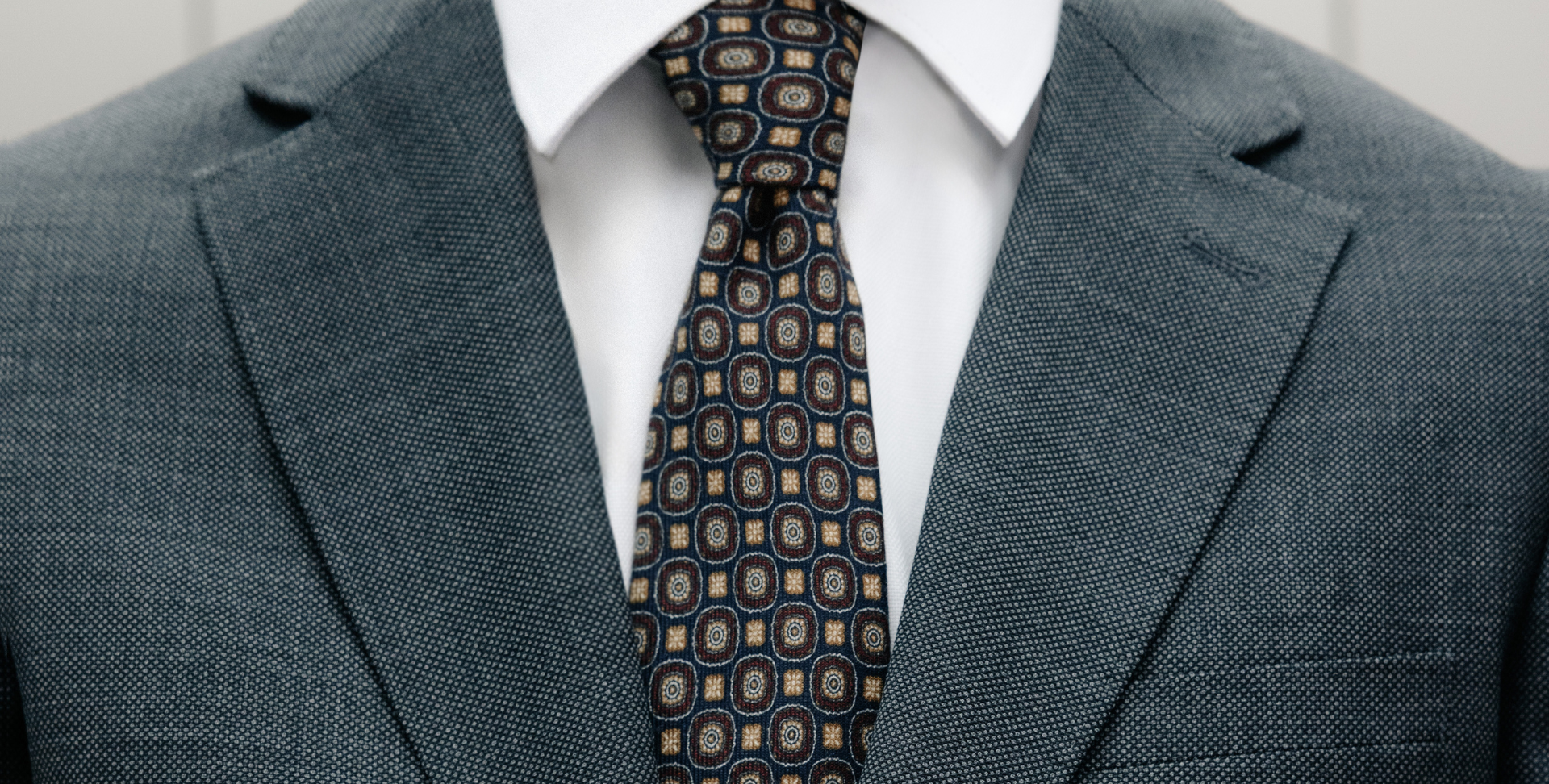
At The Boston Brand, our most frequent challenge is advising indecisive clients: “What’s the best fabric for my next suit?” Over the years, we’ve tested countless materials and learned that the right choice goes far beyond appearance; it influences everyday comfort, durability, and, of course, how you feel wearing it.
In this materials guide, I'll share my firsthand experience—from the versatility of worsted wool to the unparalleled coolness of linen—along with technical data and expert advice so you have everything you need to make the best choice.
Worsted wool: the most versatile fabric and its variations (Super 100s, blends…)
Worsted wool is undoubtedly “the most common and versatile of all fabrics, and your best option for everyday wear.” In fact, as we often say at The Boston Brand:
"Worm wool" refers to the type of combed yarn used to knit this fabric, which is made of longer fibers that give it a softer feel (basically, the opposite of a chunky wool sweater). There are countless styles, weights, and weaves of worsted wool, not to mention blends with all sorts of fibers, from polyester to elite fibers like cashmere, mohair, and silk.
fundamental properties
-
Breathability and thermal regulation
The structure of the combed fiber allows air to circulate, keeping you comfortable both indoors and outdoors. It's neither too hot nor too cool—a perfect middle ground for variable climates.
-
Fall and drape
Composed of long, uniform fibers, worsted wool drapes beautifully. A well-cut suit in this fabric falls elegantly, smooths out surface wrinkles, and retains its shape with wear.
- Variety of “Super”
- Super 100s–120s : slightly thicker, more robust and very durable threads.
- Super 130s–150s : Fine, silky, and extra-soft yarns. Ideal if you're looking for a more luxurious, albeit slightly more delicate, finish.
- Super 160s and above : extraordinarily fine, for high-end suits that border on perfection (and the price).
Luxury blends and fibers
Blends with cashmere and mohair provide a distinctive sheen and an even softer feel, ideal for special occasions. The inclusion of silk in small proportions adds fluidity and a subtle luster. At The Boston Brand, we have found that, when recommended in moderation (5–10%), these elite yarns elevate any garment without compromising durability.

Flannel: comfort and style in autumn and winter
Flannel is undoubtedly “one of the most iconic fabrics in men's fashion, with a distinctively fuzzy texture known as 'pile' that makes it feel softer against your skin.” Its insulating properties make it a favorite for the colder seasons, although you need to take good care of it to avoid the dreaded pilling.
Key features
- Cozy texture : the "fluff" not only provides warmth, but also a warm and sophisticated visual tone.
- Medium-heavy weight : ideal for autumn and winter climates; protects very well against the cold without being excessive.
- Moderate durability : less resistant than combed wool, it requires regular care to maintain its appearance.
Essential care
To extend the life of a flannel suit:
Gentle brushing after each use to remove dust and particles.
Professional dry cleaning , avoiding excess water which can clump the fibers.
Storage on wide hanger that allows the shoulder shape to be preserved.
Linen: lightness and freshness for summer
At The Boston Brand we always say that “people have been using linen longer than any other textile, and it remains as appealing today as it was 30,000 years ago.” It is the king of summer, thanks to its exceptional lightness and breathability.
Advantages of flax
- High breathability : allows for rapid evaporation of sweat.
- Extreme lightness : its minimal weight is perfect for days in the sun.
- Moisture absorption : retains up to 20% of its weight in water without feeling wet.
Disadvantages and how to minimize them
-
Natural wrinkles : the most characteristic feature of linen.
- Solution : Light steam ironing and careful folding.
-
Reduced elasticity : the lack of "give" in the fiber can cause it to break under extreme stress.
- Solution : Choose linen with a small percentage of viscose or silk for added flexibility.
Tweed: British tradition with a modern twist
Tweed, that emblematic "British wool fabric usually dyed in earthy shades of brown, gray and green", retains an air of rustic elegance that never goes out of style.
Origin and evolution
Born in the Scottish Highlands, its first purpose was to protect shepherds and hunters from the elements. Today, that ruggedness has been transferred to the urban suit and the casual blazer.
Distinctive properties
- Rough texture : adds character and visual presence.
- High weights : great for cold climates and field environments.
- Natural palette : easily combines with earth tones and autumnal accessories.
Current versatility
Although “despite its association with university professors and old-school golfers, tweed is surprisingly versatile and can look equally appropriate in a business suit as in a blazer.” I myself have made a tweed blazer my go-to piece for informal corporate events, pairing it with dark jeans and a light shirt.

Cotton: the economical and breathable option
Lighter than wool and more affordable than linen, "the cotton suit is appreciated both for its breathability in warm climates and for its diverse palette of colors and styles."
Types of cotton in tailoring
- Seersucker : famous for its pleated fabric that doesn't cling to the body.
- Chambray : simple cotton with an appearance similar to denim, slightly informal.
- Corduroy : textured and warm, ideal for mild autumn.
- 100% plain cotton : versatile and classic.
Pros and cons
-
Pros :
- Economic.
- Wide range of colors.
- Easy maintenance (washable at home).
-
Cons :
- Less "draped" than wool.
- It tends to wrinkle, although less than linen.
Final conclusions and recommendations from The Boston Brand
During my visit to The Boston Brand, I've confirmed that there's no single "best" fabric: each one has its purpose. For an everyday suit, opt for worsted wool; for autumn/winter, flannel ; for the height of summer, linen ; and for a look with a touch of history, tweed . Combine fibers and take advantage of blends to adapt to specific situations.
The key is:
- Prioritize 100% natural fibers.
- Verify the origin (Dugdale, Vitale, etc.).
- Invest in a well-spun fabric (Super 120s+ for special occasions).
- Follow precise care protocols .
This way, you'll not only have a suit that looks impeccable, but also a garment that will last and accompany you for years, just the way we like it at The Boston Brand. Cheers to suits that combine style, comfort, and durability!
